
Thirty-five hydrophilic, hydrophobic, pharmaceutical, food-grade, densified and granulated grades of pyrogenic silicon dioxide - each with verified physico-chemical data, packaging and documentation support from Bouling Group Co., Ltd.
Explore All 35 GradesBouling Group Co., Ltd is a chemical enterprise supplying fumed silica and silica-based specialties to formulators in coatings, silicones, adhesives, pharmaceuticals and food processing. Our work centres on the AEROSIL product family: keeping every grade in the range available, documented and traceable from production batch to delivered bag.
Quality at Bouling Group Co., Ltd starts with data. Every grade page on this site lists the physico-chemical profile of the product - BET surface area, pH, carbon content, tamped density - so formulators can compare grades before the first inquiry. Sales engineers back the numbers with application know-how, from dispersion trials to scale-up questions.
Every AEROSIL grade has its own product page with a verified physico-chemical data table, application guidance and packaging details. Start from the category that fits your system, or open the side-by-side comparison table.
Hydrophilic fumed silica
Hydrophobic fumed silica
Handling-optimised variants
Pharmaceutical-grade colloidal silicon dioxide
Fumed silica performance is decided by four or five measurable properties. These are the spans that define the portfolio.
One powder, many jobs: rheology control, reinforcement, anti-caking, adsorption and matting. The grade you pick decides which job it does best.
Hydrophilic and hydrophobic grades control viscosity, anti-settling and anti-sagging in waterborne, solventborne and radiation-curing systems. Automotive clear coats rely on transparent hydrophobes such as AEROSIL R 805 to keep gloss intact.
Untreated grades reinforce HTV, LSR and RTV compounds, while D4- and DDS-treated grades add hydrophobic reinforcement. AEROSIL R 106 delivers transparent reinforcement at 250 m²/g surface area.
Thixotropy keeps beads and joints where they are applied. PDMS-treated AEROSIL R 202 and R 208 hold heavy fillers in suspension through pot life and cure.
Hydrophobic grades adjust rheology and hydrophobicity of offset inks and stabilise negative-charge toner particles. Densified R 972 V improves powder flow in toner production.
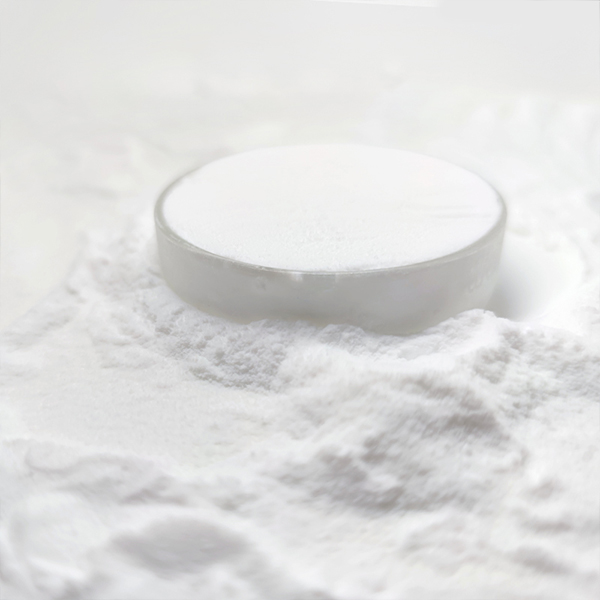
Pharmacopoeia colloidal silicon dioxide works as glidant, disintegrant aid and liquid-API carrier. Granulated AEROPERL grades make dosing dust-free and precise.
Food-grade AEROSIL 200 F and 380 F keep powdered foods, seasonings and nutritional products free-flowing as anti-caking agent E 551.
Nanoscale structure. Primary particles of 7 to 40 nm aggregate into branched chains that build hydrogen bonds or organically mediated networks in liquids. That is why one kilogram of AEROSIL can thicken what kilograms of mineral fillers cannot.
Surface chemistry on demand. The same core powder ships untreated and fully hydrophilic, or after-treated with DDS, D4, PDMS, HMDS, hexadecylsilane or silazane chemistry. Formulators choose wetting behaviour, moisture uptake and rheology strength by choosing the surface.
Purity and consistency. Flame hydrolysis delivers amorphous SiO2 at ≥ 99.8 % purity for standard grades and 99.0 - 100.5 % for pharmacopoeia grades, with a 24-month use-by date and sealed packaging that keeps the surface unchanged.
Pyrogenic silicon dioxide is made in one continuous high-temperature step, then tuned by surface chemistry and handling treatments.
Volatile chlorosilanes are vaporised and fed together with hydrogen and oxygen into the burner chamber.
At above 1000 °C the silanes hydrolyse in the flame and condense to primary particles of molten amorphous silicon dioxide.
The primary particles collide and fuse into branched three-dimensional aggregates and larger agglomerates; surface area and structure are set here.
Silanes or siloxanes convert the surface to hydrophobic where required, granulation and densification tune handling, and the powder is packed under controlled conditions.
Tell us which AEROSIL grade, application and volume you are working with, and we will come back with grade availability, packaging options and commercial terms. Samples and technical documentation support every inquiry before you commit to a purchase order.